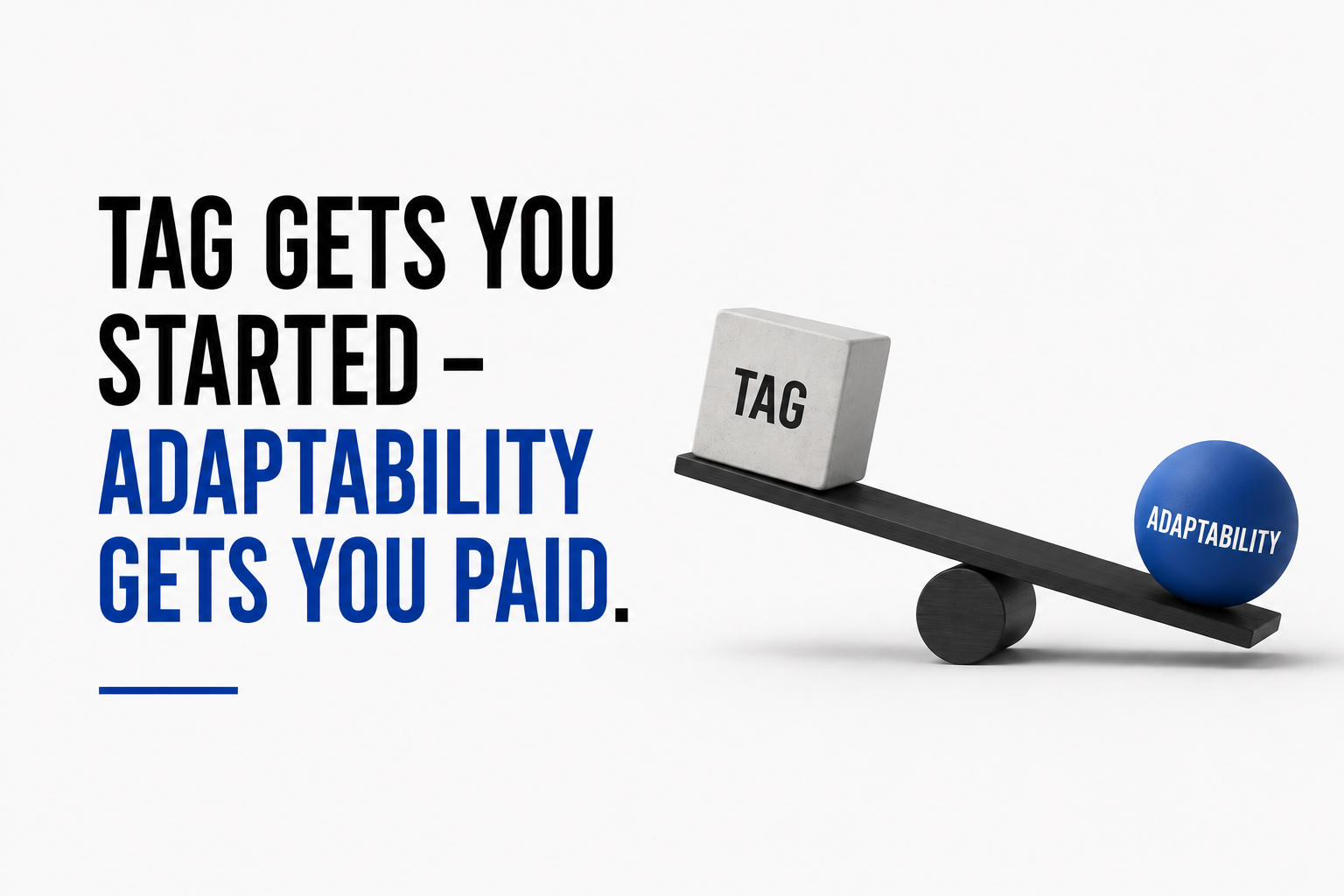
TAG Gets You Started - Adaptability Gets You Paid
Playing tight-aggressive will keep you out of trouble, but it won’t maximize your profit on its own. The real edge in live poker comes from adjusting to the players at your table and exploiting the mistakes they make.
Tight-aggressive is one of the first styles most players learn. Play good hands, raise when you enter the pot, and avoid marginal spots. It’s a solid foundation that keeps you out of trouble and helps you avoid the biggest mistakes most $1/$3 and $2/$5 players make.
It’s a good way to start.
But it’s not enough to maximize profit.
TAG Is a Starting Point, Not the Finish Line
Playing tight and aggressive will immediately put you ahead of most players in a live game. You’re entering pots with stronger ranges and taking control instead of just calling and hoping. That alone gives you a clear edge over a lot of the table.
The problem is when that’s all you do.
If you never adjust, you start playing the same hands the same way, regardless of the table or the players you’re up against. Over time, that makes you predictable, and predictable players don’t get paid.
TAG gets you in the game.
It doesn’t automatically make you money.
Live Players Don’t Play “Correct”
At $1/$3 and $2/$5, most players aren’t thinking about balance or theory. They’re not trying to counter your strategy or put you in tough spots. They’re just playing their cards and making a lot of mistakes.
They call too much, limp too often, and chase draws in spots where they shouldn’t. They also miss value in spots where they should be betting, which creates opportunities you need to take advantage of.
If you’re just playing standard TAG without adjusting, you’re leaving money on the table. You’re not bluffing the right players, and you’re not value betting enough against the ones who can’t fold.
You’re playing your cards instead of your opponents.
Position and Table Dynamics Matter More Than Labels
Good players don’t sit down and think about what label they fall under. They don’t ask themselves if they’re playing TAG or LAG in a session. They look at the table and figure out what’s actually going on.
They pay attention to who’s loose, who’s tight, who’s calling too much, and who’s capable of folding. Those details matter far more than any fixed style or approach.
Position and stack depth also play a huge role in how hands should be played. A hand that’s a fold in one game can easily become an open in another depending on who’s at the table and where you’re seated.
Poker isn’t about sticking to a style.
It’s about understanding the situation.
Predictability Costs You Money
If you play a straightforward TAG style long enough, people will start to notice patterns. You enter pots with strong hands, you bet when you have it, and you slow down when you don’t. That makes it easier for observant players to adjust against you.
Now you stop getting paid in the spots that matter most. Players begin folding when you’re strong and putting pressure on you when you show weakness, which cuts into your overall profit.
The damage doesn’t show up all at once.
It shows up in missed value over time.
To fix that, you don’t need to overhaul your entire game. You just need to add some flexibility by opening a little wider in the right spots and applying pressure when the situation calls for it.
The Goal Is Adaptability
TAG is valuable because it gives you structure and discipline. It helps you avoid bad spots and keeps your decision making clean. But it’s only the foundation, not the finished product.
The real goal is to adapt to the table in front of you. That means widening your range when the table is passive, tightening up when the game gets aggressive, and adjusting your bet sizing based on who you’re playing against.
You also need to recognize when to push for value and when to slow down. Those adjustments are what separate solid players from players who consistently win.
The best players don’t label themselves.
They adjust.