Balancing Poker and Life: How to Build a Game That Lasts
The goal is to build a poker life that can coexist with everything else that's important to you rather than constantly competing with it.
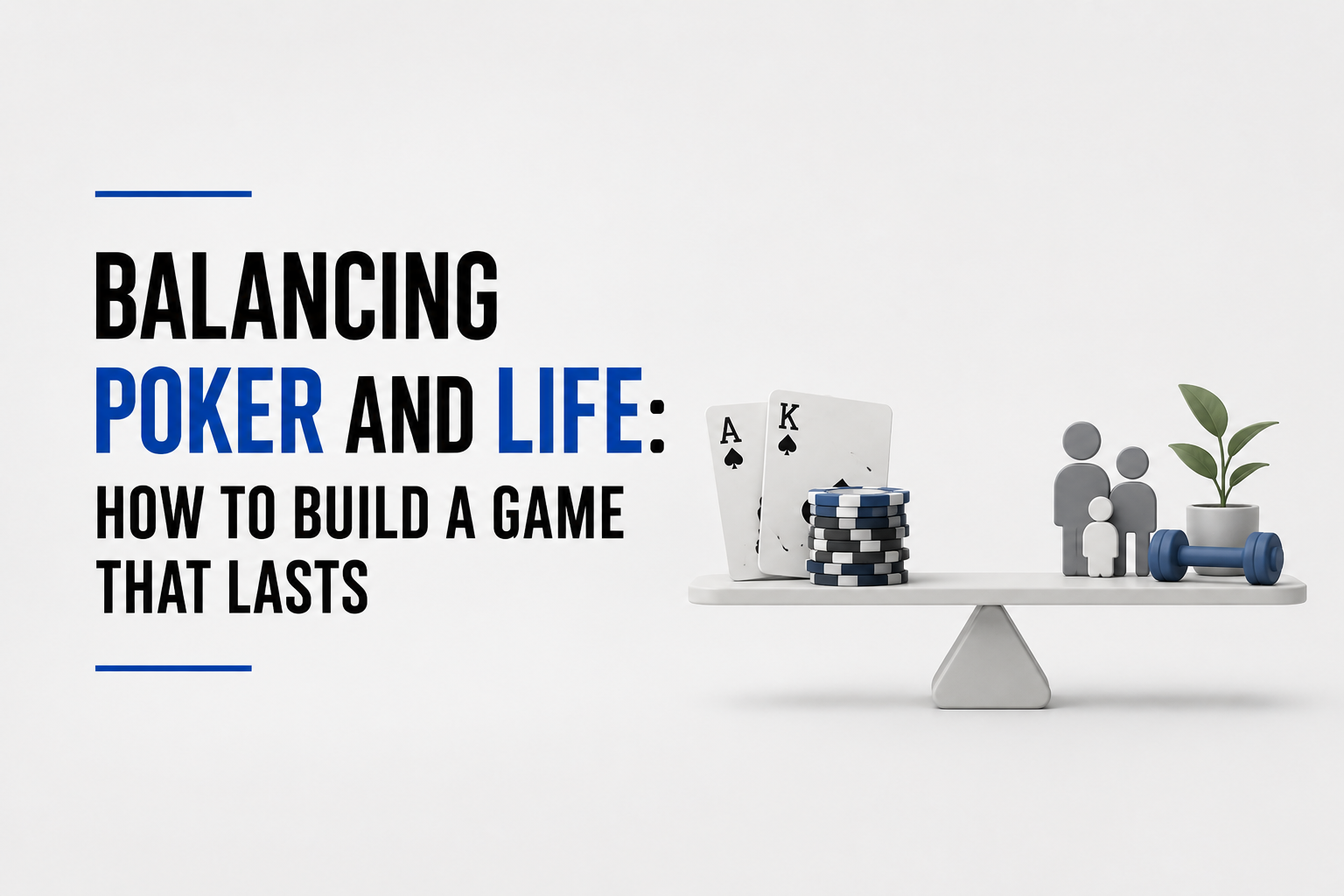
Poker offers something most hobbies and careers don't.
Freedom.
You can choose when to play, how often to study, and how much time you want to invest in improving. For many players, that's part of the appeal.
The problem is that freedom without structure can quickly become a problem.
I've seen players become so focused on poker that everything else starts taking a back seat. Family, health, friendships, and even their careers begin to suffer because they're always chasing the next session, the next study video, or the next opportunity to make money.
That's not balance.
And it's not sustainable.
What Balance Actually Means
When people hear the word balance, they often think everything needs to receive equal attention.
That's not realistic.
There will be times when poker requires more of your focus and times when family, work, or other responsibilities need to come first.
Balance is not about equal time.
It's about sustainable priorities.
The goal is to build a poker life that can coexist with everything else that's important to you rather than constantly competing with it.
The Biggest Pressure Points
Poker creates challenges that most hobbies don't.
Money is one of them.
When real money is involved, emotions tend to follow. A winning session can leave you feeling great. A losing session can leave you frustrated if you're not careful.
Time is another challenge.
A cash game can run longer than expected. A good game can tempt you to stay another hour. Then another. Before you know it, you've missed dinner, skipped plans, or broken commitments you made earlier.
Those small decisions add up over time.
What Works for Me
I'm not a full-time poker player.
I work a full-time job, have a family, and like most people, I have responsibilities that extend well beyond the poker table. That means poker has to fit into my life, not the other way around.
One thing that has helped tremendously is being completely open with my wife about poker. She knows when I plan to play, what my schedule looks like, and how my sessions went. If I have a winning session, I tell her. If I lose, I tell her that too.
There are no surprises.
That transparency builds trust and removes a lot of the tension that poker can sometimes create in a household.
I've also learned that family comes first.
If something comes up on a day that I planned to play, I don't force it. I simply move the session to another day. The poker game will still be there tomorrow.
The reality is that there will always be another game, another session, and another opportunity to play.
Missing one night of poker isn't going to impact your long-term results.
Missing important moments with your family might.
More Time Doesn't Mean More Poker
If you're single, balancing poker and life may look very different.
You might have more flexibility than someone with a spouse, kids, or a packed family schedule. You can play more often, study longer, and jump into good games whenever they become available.
That can be a huge advantage.
But it can also become a trap.
Just because you can spend every free hour on poker doesn't mean you should.
I've seen players build their entire identity around the game. Every day off becomes another session. Every conversation becomes about poker. Every weekend revolves around finding action.
Over time, that can become just as unhealthy as neglecting poker entirely.
The goal isn't simply to maximize volume.
It's to build a life you actually enjoy living.
Build a Life Outside the Game
Some of the strongest players I've met have interests completely unrelated to poker.
They work out.
They travel.
They spend time with friends and family.
They pursue hobbies and interests that have nothing to do with cards.
Those things aren't distractions from poker.
They're part of what allows them to play their best.
When poker becomes your only source of fulfillment, every downswing feels bigger. Every losing session feels more personal. Your confidence starts moving up and down with your results.
That's not a healthy place to be.
The strongest players usually have something meaningful outside the game.
Poker is important.
It's just not everything.
Communicate Before Problems Start
One of the best things a poker player can do is communicate clearly with the people around them.
For married players, that often means being open with your spouse about your schedule, your goals, and your results.
For single players, it may simply mean setting boundaries that prevent poker from consuming every available hour.
Either way, clarity matters.
The people around you should know where poker fits into your life, and you should know where it ranks among your priorities.
Consistency builds trust.
Protect Your Time Away From Poker
Being physically away from the table isn't the same thing as mentally being away from it.
A lot of players leave the casino but never leave the game.
They're replaying hands in their head. Thinking about bad beats. Looking at poker content on their phone. Analyzing spots they played three hours ago.
We've all done it.
But recovery matters.
Whether you're spending time with family, friends, or simply enjoying a day away from the tables, give yourself permission to disconnect.
The game will still be there tomorrow.
Keep Poker Money Separate
This is one of the simplest ways to reduce stress.
Your bankroll should not be mixed with your everyday finances.
When poker money and personal money become intertwined, every downswing feels bigger than it actually is. Decisions become emotional instead of logical.
A separate bankroll creates clarity.
It also creates confidence because you know exactly what is at risk and what is not.
Don't Bring the Downswing Home
This might be the hardest part of balancing poker and life.
Poker is emotional.
Bad beats happen. Downswings happen. Frustrating sessions happen.
The danger is allowing those emotions to follow you home.
Your spouse didn't lose that pot.
Your kids didn't crack your aces.
Your friends aren't responsible for the river card that got there.
Yet many players carry frustration away from the table and unknowingly let it affect other parts of their lives.
Develop a reset routine.
Take a short walk before leaving the casino. Listen to music during the drive home. Hit the gym the next morning. Give yourself time to decompress before jumping back into everyday life.
Leave the session at the table.
Take Care of Yourself
Poker requires mental energy.
So does life.
If you're not sleeping enough, eating poorly, skipping workouts, or constantly running on empty, both areas will suffer.
Many players think health is separate from poker performance.
It's not.
Better sleep improves decision-making. Exercise helps manage stress. Good nutrition improves focus.
Taking care of yourself is one of the easiest ways to improve both your poker game and your quality of life.
Define What Success Actually Means
Most players define success by results.
Win rate.
Hours played.
Money earned.
Those things matter.
But they aren't the entire picture.
If you're winning at poker while losing in other areas of life, that's not success.
Real success means being able to pursue poker while maintaining strong relationships, good health, and a life you're proud of away from the table.
That's the game that lasts.