Loss Aversion: The Mental Leak You Don't Realize You're Making
Even if you win those chips back and get back to even, the emotional impact of the original loss doesn't simply disappear. Financially, you may be right back where you started. Mentally, you may still be carrying the frustration, fear, or urgency that loss created.
There are hands you'll remember for years.
Your aces got cracked.
You lost a massive pot with a set.
You made the right decision, and the river card went the other way.
Losing those pots is part of poker.
What happens next is where many players get into trouble.
Sometimes you start chasing losses. Other times you become overly cautious because you don't want to lose another big pot. Either way, your decisions begin changing, even if you don't realize it.
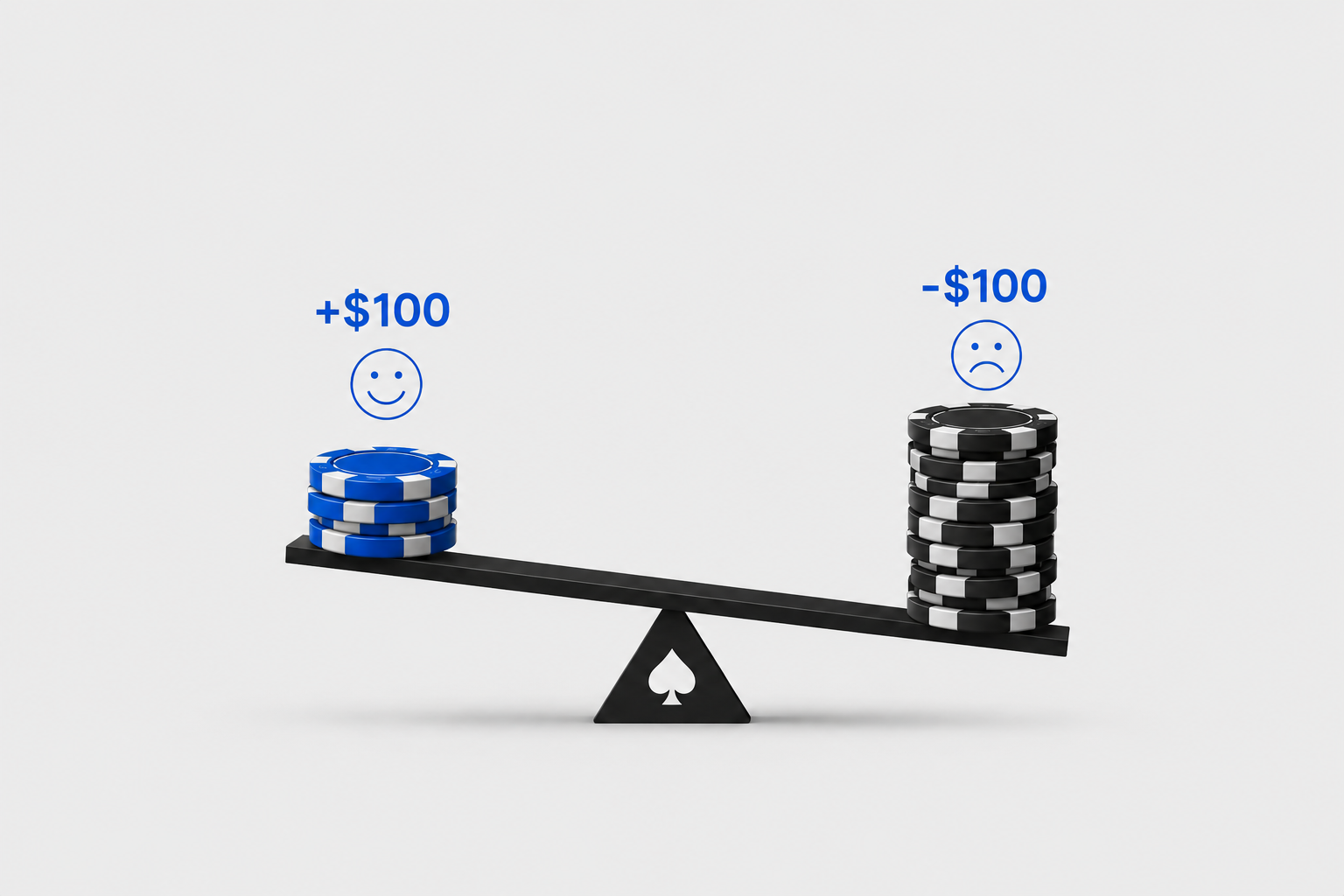
Psychologists Daniel Kahneman and Amos Tversky called this loss aversion. Their research found that the pain of losing is psychologically about twice as powerful as the pleasure of winning the same amount.
Poker players experience that every day.
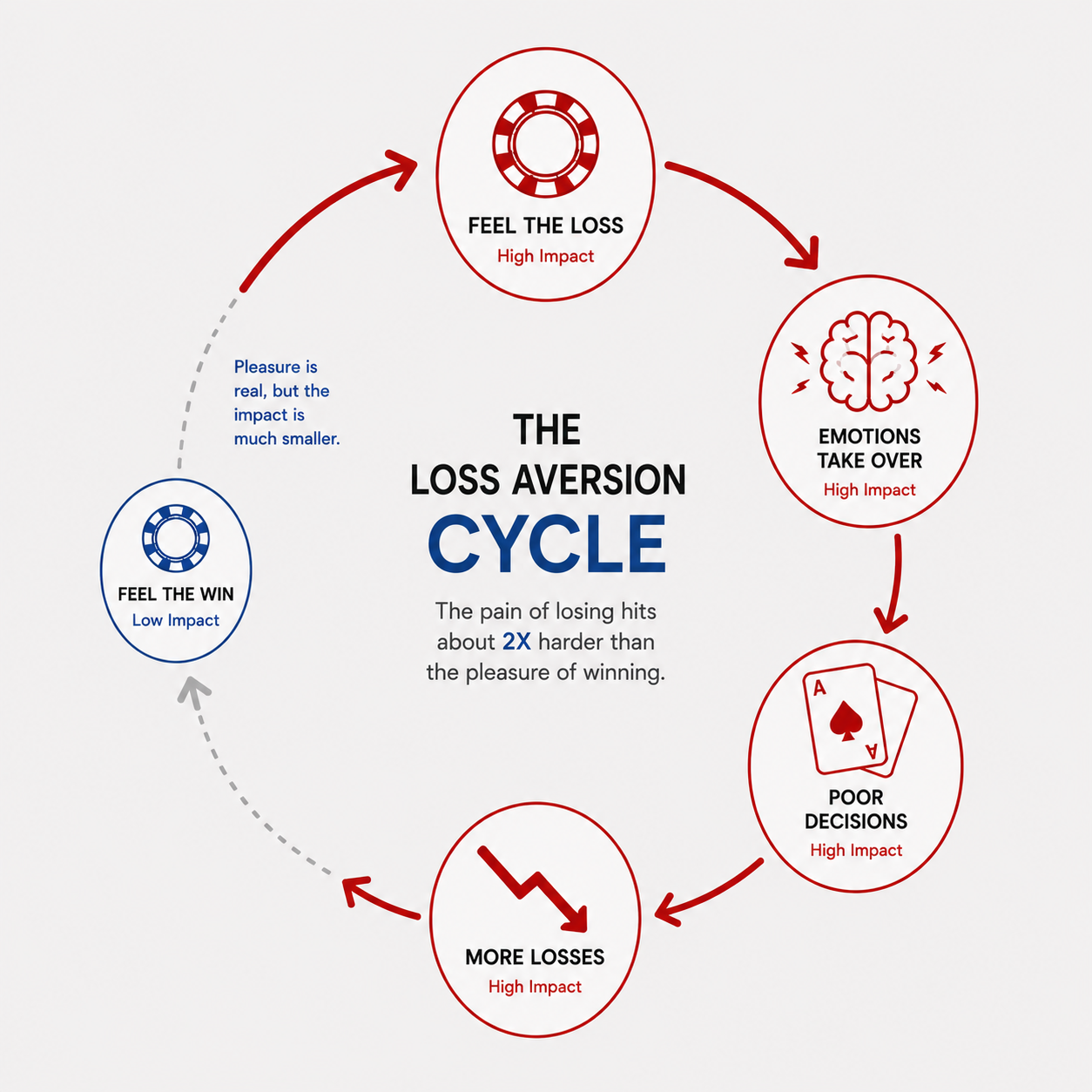
The Loss Aversion Cycle
At first glance, this looks like a simple cycle. In reality, it can quietly shape an entire session.
You lose a big pot.
The emotional response changes your thinking.
That leads to decisions you normally wouldn't make.
Those decisions create more losses, increasing the emotional pressure you're feeling.
But here's the part most players don't recognize.
Even if you win those chips back and get back to even, the emotional impact of the original loss doesn't simply disappear. Financially, you may be right back where you started. Mentally, you may still be carrying the frustration, fear, or urgency that loss created.
Getting even doesn't always reset your mindset. It often changes the way you approach the rest of the session. Some players become overly cautious because they don't want to lose what they just recovered. Others continue forcing the action because they're still emotionally attached to the earlier loss.
Before long, you're no longer playing the game that's in front of you.
You're reacting to the game that's already behind you.
What Loss Aversion Actually Looks Like
Loss aversion doesn't always look like someone punting three buy-ins.
Sometimes it looks like:
- Checking back top pair because you're afraid of getting raised.
- Folding profitable bluff catchers because another loss feels unbearable.
- Passing on a profitable bluff because you "don't want to risk it."
- Calling too light because you want your chips back.
- Playing hands you normally fold because you're trying to get unstuck.
Every one of those decisions has the same root cause.
You're no longer trying to make the highest EV decision.
You're trying to avoid emotional discomfort.
Why This Matters
If you've been reading ApexPokerLab, you've probably noticed a common theme.
Whether we're talking about positive EV decisions, preflop strategy, GTO, or game selection, it all comes back to one thing:
Making better decisions.
Loss aversion attacks that process.
When emotions take over, you stop asking:
"What's the highest EV decision?"
And start asking:
"How do I stop feeling this way?"
Those are two completely different questions.
One leads to disciplined, profitable poker. The other leads to emotional decisions that slowly pull you away from the player you're capable of being.
That's why understanding loss aversion isn't just about improving your mental game. It's about protecting your decision-making when it matters most.
Breaking the Cycle
The goal isn't to eliminate loss aversion. That's impossible.
Every poker player feels the frustration of losing a big pot. The difference is recognizing when those emotions are starting to influence your decisions.
One habit that's helped me over the years is asking myself a simple question after losing a significant pot:
"If the last hand never happened, would I make the same decision right now?"
If the answer is yes, I'm probably thinking clearly.
If the answer is no, it's a sign that my emotions may be influencing the way I'm playing.
Sometimes that's all it takes to reset your thinking.
The best players don't pretend they're immune to loss aversion. They recognize it, separate the last hand from the next one, and get back to making the highest EV decision available.
Because every hand is a new decision.
Don't let the last one make it for you.
Final Thoughts
Loss aversion isn't a weakness. It's part of being human.
Research has shown that the psychological pain of losing is significantly stronger than the pleasure of winning the same amount. That's why one bad beat or one lost buy-in can stay with you for hours, even if you eventually win those chips back.
The cards may have evened out.
Your emotions often haven't.
The players who consistently win aren't the ones who don't feel the sting of losing. They're the ones who recognize it, acknowledge it, and don't allow it to influence the decisions that follow.
The next time you lose a significant pot, don't just focus on the chips that left your stack. Pay attention to what happens next. Are you still making decisions based on the hand in front of you, or are you still emotionally tied to the one that's already over?
Recognizing loss aversion is the first step.
Moving past the emotional impact is what allows you to think clearly again, return to making fundamentally sound decisions, and focus on what matters most: making the highest EV play, one hand at a time.