Does GTO Really Matter at Low Stakes?
Should low-stakes players spend time studying GTO? Absolutely—but probably not for the reason you think. Learn how GTO provides a foundation for better decision-making while real profit comes from exploiting the mistakes your opponents make.
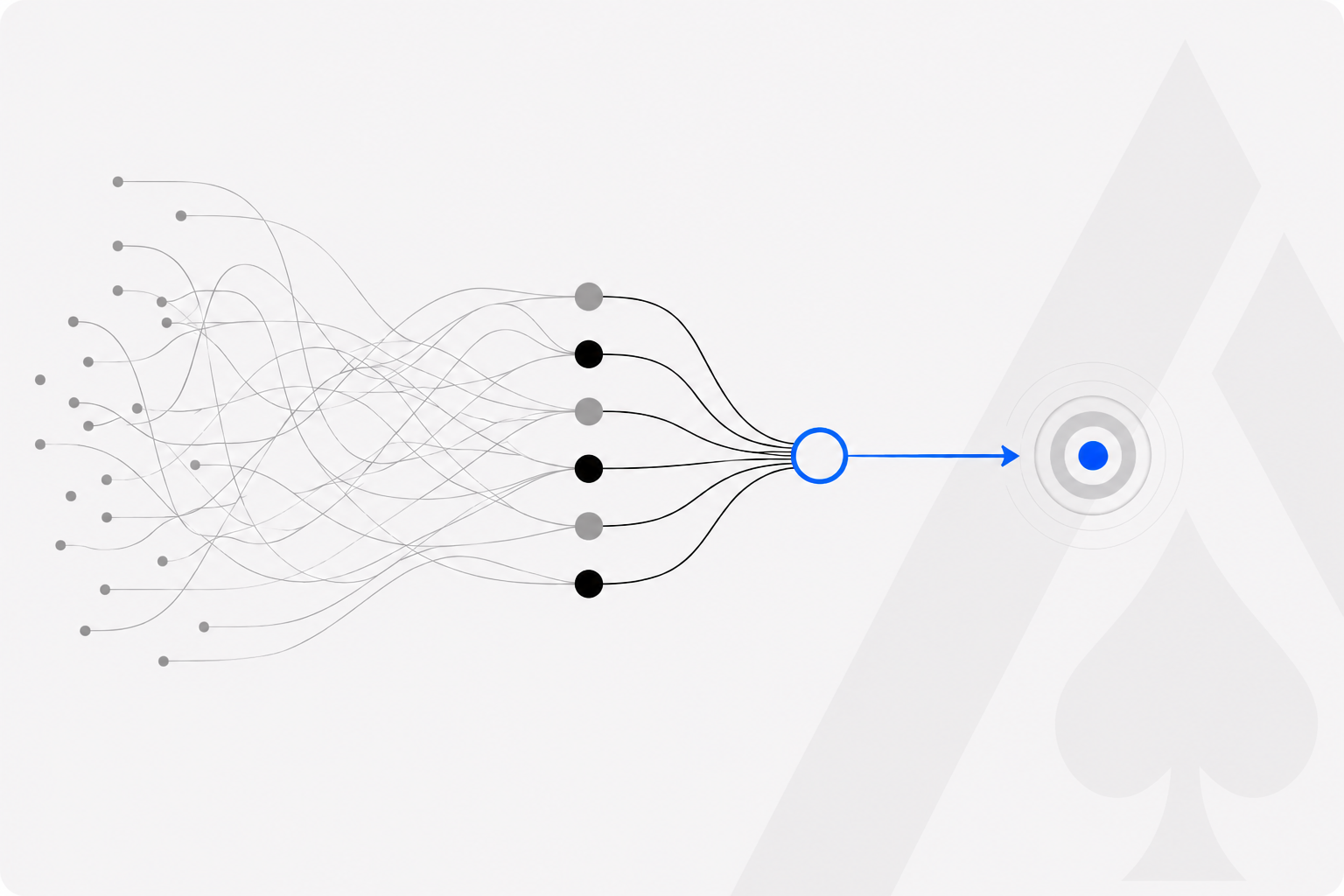
Spend five minutes on YouTube or social media watching poker content, and you'll probably come away thinking that every poker player should be studying solvers, memorizing ranges, and learning Game Theory Optimal (GTO) strategy.
If that's all you listen to, it's easy to believe GTO is the only path to becoming a winning player.
So does GTO really matter if you're playing $1/$3 or $2/$5 live cash games?
I think the answer is yes.
Just probably not for the reason you think.
What Is GTO?
Before we go any further, let's quickly define what GTO actually is.
Game Theory Optimal (GTO) is a mathematical approach to poker that aims to make your strategy difficult to exploit. Instead of trying to take advantage of a specific opponent, GTO focuses on playing a balanced strategy that can't easily be countered over the long run.
Think of it as the theoretical blueprint for fundamentally sound poker.
That's an important distinction because most of us don't play against computers or world-class professionals. We play against real people who make mistakes.
And that's where this article begins.
Think of GTO as learning the rules of the road. You need to know them before you drive. But once you're on the highway, you still have to pay attention to the traffic around you. Not everyone follows the rules, and the best drivers know how to adjust.
GTO Gives You a Foundation
I think every serious low-stakes player should spend some time studying GTO.
Understanding opening ranges, 3-betting ranges, and how position influences your decisions gives you a solid foundation.
I'm not suggesting you spend hours every week studying solver outputs. But I do think serious players should invest enough time to understand the fundamentals.
Once you know what fundamentally sound poker looks like, you'll be in a much better position to recognize when your opponents are getting out of line.
That's where I think many players miss the point.
GTO isn't the finish line.
It's the foundation.
The Biggest Misconception
I think a lot of players misunderstand what GTO is actually trying to accomplish. They see charts and assume poker becomes a game of memorization.
"If I'm under the gun, I play these hands."
"If I'm facing this raise size, I continue with this range."
"If the board comes this way, I bet this percentage of the time."
Those concepts are useful because they give you a baseline.
But they don't make your decisions for you.
Poker isn't played against charts.
It's played against people.
The Problem With Playing "Perfect" Poker
Here's where I think many players go wrong.
They spend so much time trying to play balanced poker that they stop paying attention to who's sitting across the table.
The truth is, very few players in a typical $1/$3 or $2/$5 game are playing anything close to GTO.
Some limp hands they should raise. Others call raises with hands they should fold. Some never bluff, while others refuse to fold top pair no matter how much pressure you apply.
Every one of those mistakes creates an opportunity.
If you're too focused on playing "perfect" GTO poker, you'll often miss the chance to exploit the very mistakes that make live poker so profitable.
Theory Helps You Recognize Mistakes
This is where I think GTO becomes incredibly valuable.
Not because you should copy it.
Because you should understand it.
If you know what a balanced opening range looks like, you'll immediately recognize the player who's entering far too many pots. If you understand proper defending frequencies, you'll spot the player who simply refuses to fold. If you know what reasonable betting patterns look like, you'll quickly identify players who are either massively over-bluffing or almost never bluffing at all.
Without that foundation, it's much harder to recognize when someone is making a mistake.
GTO gives you the baseline.
Your opponents provide the opportunity.
Learn the Rules Before You Break Them
There's an old saying that you have to learn the rules before you can break them.
I think that applies perfectly to poker.
Study GTO. Learn solid pre-flop ranges. Understand why certain hands are raises, calls, or folds. Build a strong foundation.
Then sit down at a live poker table and pay attention.
Because the biggest money at low stakes rarely comes from playing perfectly balanced poker.
It comes from recognizing when your opponents aren't.
Final Thoughts
So, does GTO really matter at low stakes?
Absolutely.
Not because you're trying to become a solver.
Because it gives you a baseline for your decision making.
Once you understand that baseline, your focus should shift from trying to play like a computer to understanding the people sitting across the table.
The biggest edges in live poker come from recognizing where your opponents deviate from sound strategy and making profitable adjustments.
There are plenty of places that will teach you what hands to play or what a solver would do in a given spot. My goal is different. I want to help you understand why those strategies work, how real players deviate from them, and how changing the way you think about poker leads to better decisions at the table.
Because at the end of the day, poker isn't about memorizing charts.
It's about thinking better than your opponents.
What's Next
In this week's issue of The Apex Edge, we'll take this idea from theory to practice. I'll share a simple, practical way to apply the concepts from this article during your next poker session, helping you make better decisions before the flop and after it.
Not a member of The Apex Edge yet? Join for free and start thinking smarter at the table.