Pattern Recognition in Poker: Learning to See What Others Miss
Good poker decisions aren't based solely on what you're holding. They're based on what your hand is worth against the range of hands your opponent could have.
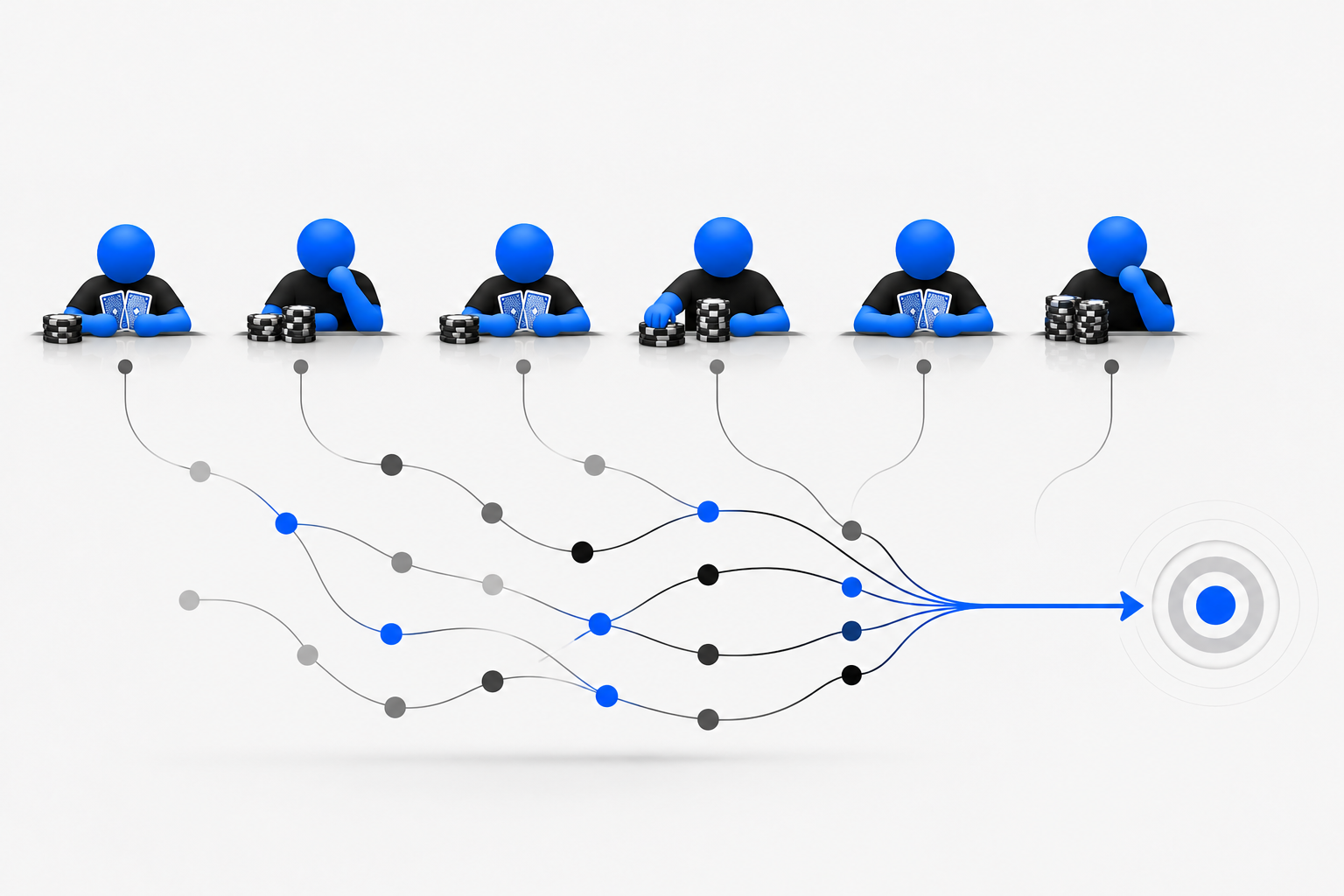
One of the biggest differences between an experienced poker player and someone who's simply played a lot of poker is what they notice at the table.
Two players can sit in the same game, watch the same hands, and walk away with completely different information.
One remembers that a player made a big river bet and showed down a strong hand. The other remembers that this particular player has made several large river bets throughout the session, and every time they've shown down a hand, it's been for value.
That's pattern recognition.
It's the ability to identify repeated behaviors, connect them to previous observations, and use that information to make better decisions.
And in live low-stakes No-Limit Hold'em, where players often develop predictable habits, it's a skill that can provide a significant edge.
You're Collecting Information on Every Hand
One of the most common mistakes recreational players make is paying attention only when they're involved in a hand.
They fold their cards, check their phones, watch YouTube, or simply wait for the dealer to give them something worth playing. I've even seen people watching a movie at the table.
Meanwhile, the rest of the table is providing information.
Who raises frequently before the flop? Who rarely raises without a premium hand? Which players call too often? Who seems uncomfortable facing aggression?
These observations might not mean much individually, but over time, they begin to tell a story.
Consider a player who limps into nearly every pot. After watching for an hour, you notice that whenever this player raises pre-flop, they show up with a particularly strong hand.
Now, the next time they raise, you have information that should influence your decision.
You don't know exactly what they're holding, but you have a better understanding of what their raise might represent.
The more attention you pay when you're not involved in a hand, the more prepared you'll be when you are.
Recognizing Patterns vs. Making Assumptions
There's an important distinction between recognizing a pattern and making an assumption.
Let's say an opponent makes a large river bet and shows down the nuts.
Does that mean every large river bet they make represents an extremely strong hand?
Of course not.
One hand tells you what happened in that particular situation. It doesn't necessarily tell you how someone plays every similar situation.
But suppose you've watched that same opponent make four large river bets throughout the evening. Three went to showdown, and all three were strong value hands.
Now you're beginning to recognize a tendency.
The next time you're facing a large river bet from this player with a marginal bluff-catcher, that information becomes relevant.
You still need to consider the board, the action leading up to the river, and the price you're getting. But you're no longer making your decision without any history.
This is where pattern recognition becomes valuable.
You're not trying to predict the future with certainty. You're using previous information to make a better decision in the present.
And remember, patterns become more reliable as you collect more observations. A few hands can provide clues, but they shouldn't automatically become rules.
Five Patterns Worth Watching at Low Stakes
You don't need to analyze every movement or memorize every hand at the table. Start by paying attention to a few behaviors that can influence your decisions.
1.Pre-flop Raising Tendencies
Some players raise a wide variety of hands. Others only raise when they're holding something strong.
Understanding the difference can help you avoid expensive situations against tighter opponents and identify opportunities against players who enter too many pots.
A raise from someone who has been raising every other hand should carry a different meaning than a raise from someone who hasn't voluntarily entered a pot in the last hour.
2. Bet Sizing
Many recreational players develop predictable betting habits without realizing it.
Some bet small with draws and large with strong made hands. Others use oversized bets when they're bluffing because they're trying to force a fold.
These tendencies aren't universal, and you shouldn't assume that a particular bet size always means the same thing.
But when you repeatedly observe a relationship between someone's sizing and the strength of their hand, it's worth remembering.
3. Reactions to Aggression
Pay attention to what happens when players face a raise.
Some opponents are uncomfortable continuing without a strong hand. Others seem almost incapable of folding once they've put money into the pot.
These are two very different types of players, and they require different adjustments.
Against someone who folds too frequently, you may find more profitable bluffing opportunities.
Against someone who calls too often, your money is generally better made through value betting.
The goal isn't simply to recognize that these players are different. It's to understand how those differences should change your strategy.
4. Flop and Turn Behavior
One particularly useful pattern involves players who continuation-bet frequently on the flop but give up when called.
Imagine an opponent raises preflop, bets the flop, and then checks the turn.
You've seen this sequence several times, and when their hands have reached showdown, they've often been relatively weak.
That doesn't mean every turn check is an invitation to bluff. The board, ranges, and previous action still matter.
But recognizing that this player frequently gives up after a failed continuation bet can help you identify opportunities that another player might overlook.
5. Showdown Behavior
Showdowns are some of the most valuable sources of information in live poker.
You get to see the actual cards someone held and compare them to the decisions they made throughout the hand.
Did they call three streets with a weak pair? Did they slow-play a strong hand? Did they make a large bluff on a board that heavily favored their opponent?
The next time you see that player take a similar line, you'll have something to reference.
And while you won't always see enough showdowns to establish a reliable pattern, the ones you do see can be particularly informative.
Recognizing Situations, Not Just Players
Pattern recognition goes beyond identifying individual player tendencies.
As you gain experience, you begin recognizing situations that you've encountered before.
You recognize when a board is particularly favorable for the preflop raiser. You notice when a passive opponent suddenly becomes aggressive. You understand when a particular bet size puts pressure on a range of hands that may struggle to continue.
These are patterns in how poker situations develop.
For example, suppose you're holding a medium-strength hand on the river. Your opponent has played passively throughout the hand but suddenly makes a large bet.
A recreational player might focus entirely on their own cards.
"I have top pair. That's a pretty good hand."
A more thoughtful player starts asking questions.
Why is this opponent betting so much now? What hands would they play this way? Have I seen them make large bluffs before? Does their betting line make sense?
The strength of your hand hasn't changed, but your understanding of the situation has.
Good poker decisions aren't based solely on what you're holding. They're based on what your hand is worth against the range of hands your opponent could have.
Pattern recognition helps you make that assessment.
Be Careful Not to See Patterns That Aren't There
There's a downside to pattern recognition that doesn't get discussed enough.
Our brains are naturally inclined to find patterns, even when there isn't enough evidence to support them.
You see someone bluff twice and label them a maniac.
You watch a player fold to two raises and decide they're easy to push around.
You lose three hands against the same opponent and convince yourself they're always getting lucky.
These conclusions can lead to costly adjustments.
Poker involves variance, and a handful of observations doesn't necessarily reveal someone's overall strategy.
It's also easy to remember the hands that support what you already believe while overlooking the ones that contradict it.
If you've decided that a particular player never bluffs, you might remember every strong hand they show down while forgetting the occasional bluff.
The solution is to remain open to new information.
Recognize tendencies, but don't become attached to them. As the evidence changes, your assessment should change with it.
How to Improve Your Pattern Recognition
The best way to develop this skill is to make observation a deliberate part of your game.
During your next live session, pick two opponents and pay particular attention to how they play.
You don't need to track every hand. Start with something simple.
Watch how frequently they raise pre-flop. Notice what happens when someone raises their continuation bet. Pay attention to their river bet sizing and what they eventually show down.
Then ask yourself a question:
If I played a hand against this opponent right now, what do I know about them that could help me make a better decision?
Maybe you've noticed that one player rarely bluffs the river. Perhaps another calls far too often with weak hands.
Now consider how you'd adjust.
Would you value bet thinner? Bluff less frequently? Give their raises more credit?
The important part is connecting your observations to an actual strategic decision.
Over time, this process becomes more natural. You'll begin noticing behaviors without consciously searching for them, and familiar situations will become easier to recognize.
That's when experience starts becoming a meaningful advantage.
Final Thoughts
Playing thousands of hands doesn't automatically make someone a better poker player.
What matters is what they learn from those hands.
Two players can spend the same amount of time at the table, but the player who pays attention, identifies tendencies, and makes thoughtful adjustments will often develop a much greater understanding of the game.
Pattern recognition isn't about being able to read someone's mind or knowing exactly what cards they're holding.
It's about collecting information, recognizing when that information matters, and using it to make better decisions.
The next time you fold your cards, don't mentally check out of the hand.
Keep watching.
Because sometimes the most valuable information you'll gain at the poker table comes from a hand you weren't even playing.
Sharpen Your Thinking. Improve Your Game.