Why Great Players Know When to Let It Go
In live poker, the chips you don't lose are just as valuable as the chips you win.
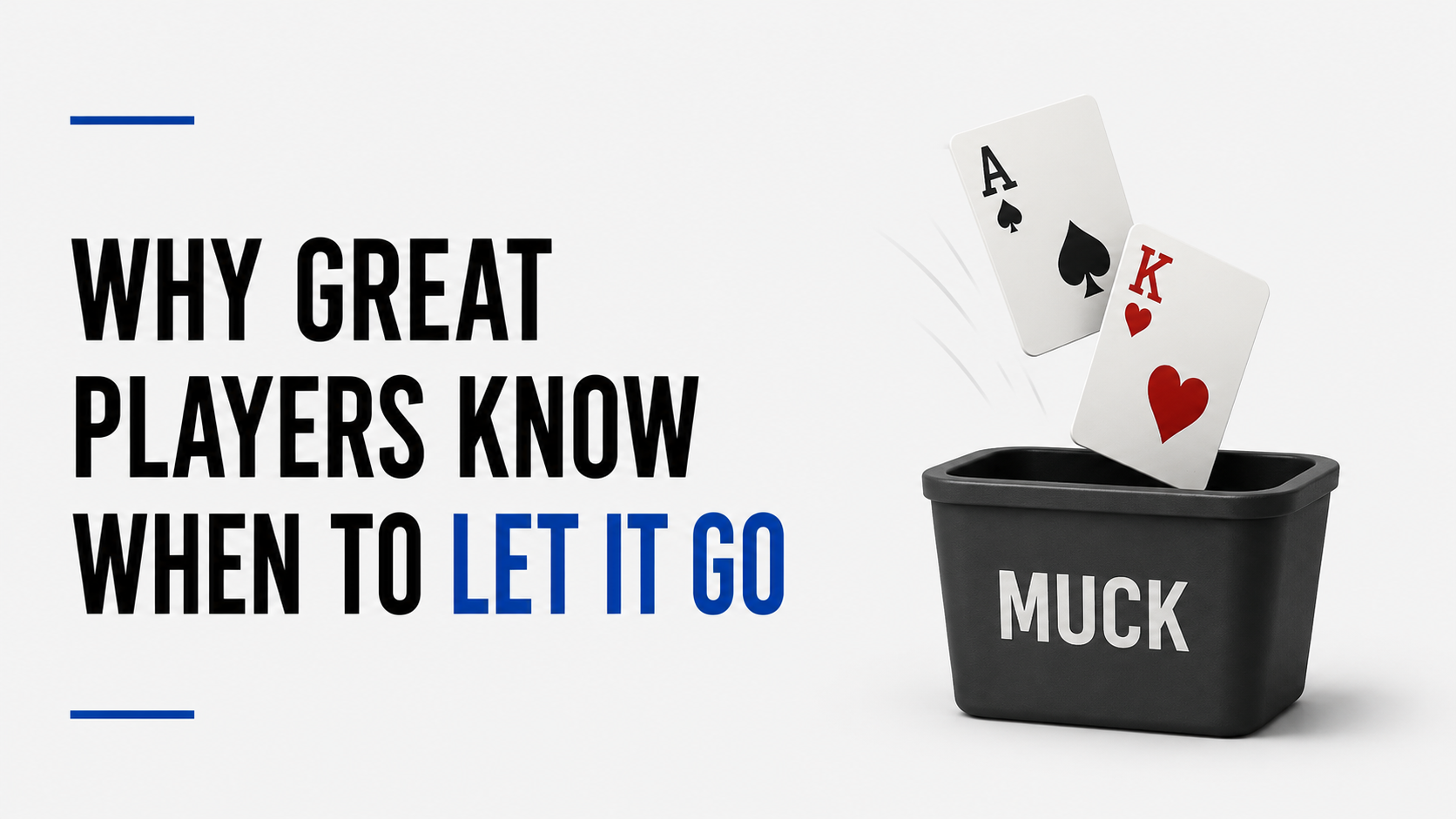
Every poker player remembers the hero call.
The big river bluff they picked off. The time they looked someone up with ace-high. The huge pot they dragged after trusting their instincts.
Almost nobody remembers the great fold.
That's a mistake.
Some of the biggest winning sessions I've had weren't because I made an incredible bluff or found an amazing call. They were because I found one or two disciplined laydowns that saved me an entire buy-in.
In live poker, the chips you don't lose are just as valuable as the chips you win.
Most Players Pay to Find Out
One of the biggest leaks I see in low- and mid-stakes live poker is that players hate folding.
Not because they think they're ahead.
Because they want to know.
"I have to see it."
"He could be bluffing."
"I can't fold this hand."
"I'll never forgive myself if he turns over a missed draw."
Those thoughts have nothing to do with poker strategy.
They're driven by curiosity and ego.
Many players end up paying hundreds of dollars just to satisfy that curiosity. They convince themselves they're making a hero call, when in reality they're simply paying to find out.
Sometimes information is too expensive.
The Laydown Starts Long Before the River
One of the biggest misconceptions in poker is that a laydown is a river decision.
It isn't.
By the time you're facing a big river bet, your opponent has already been telling a story for three streets. Every check, bet, call, and raise has either strengthened or weakened that story.
That's why experienced players don't suddenly panic when the river card hits. They've been evaluating the hand from the very beginning, asking whether each action makes sense and whether the story being told is becoming stronger or weaker.
Did the preflop action fit the range they're representing? Did the flop continue that story? Did the turn strengthen it?
By the river, you shouldn't be surprised.
You should already have an opinion.
Respect the Story
Many players become too attached to the strength of their own hand.
They look down at top pair, an overpair, or even a set and immediately start thinking about how strong their hand is. What often gets overlooked is the story their opponent has been telling since the hand began.
Every action should fit together.
If a tight, straightforward player raises before the flop, bets the flop, barrels the turn, and shoves a river that completes several obvious value hands, that's a story worth respecting.
It doesn't mean they're never bluffing.
It means the evidence is pointing in one direction.
The question isn't whether they could be bluffing.
The better question is whether their story is believable.
The players who consistently make great laydowns aren't trying to catch every bluff. They're simply willing to trust the evidence when the story makes sense.
Think Long-Term
Poker isn't won by making one spectacular hero call.
It's won by consistently making good decisions over thousands of hands.
Every disciplined fold protects your bankroll. Every disciplined fold gives you another opportunity to find a better spot. Every disciplined fold keeps your emotions under control instead of letting one expensive decision define your session.
The players who consistently win aren't trying to prove they're right.
They're trying to make the highest-quality decision with the information they have.
That's a very different mindset.
Final Thoughts
Finding great laydowns isn't about being fearless.
It's about being disciplined.
The players who consistently win over the long run understand that every chip they save is just as valuable as every chip they win. They aren't trying to solve every mystery or prove they're right every time they're put to the test.
They're making thoughtful decisions based on logic, evidence, and the story unfolding in front of them.
What's Next
Knowing that folding can be the most profitable decision is one thing.
Developing a consistent thought process that helps you recognize those spots in real time is something entirely different.
This week in The Apex Edge, we'll build on this idea by introducing a practical decision-making framework you can use whenever you're facing a big bet. Rather than memorizing situations or relying on gut instinct, we'll focus on a repeatable way of thinking that helps you evaluate the evidence, slow yourself down, and make better decisions under pressure.
Because that's what winning poker is really about.
Not memorizing what to do.
Learning how to think.